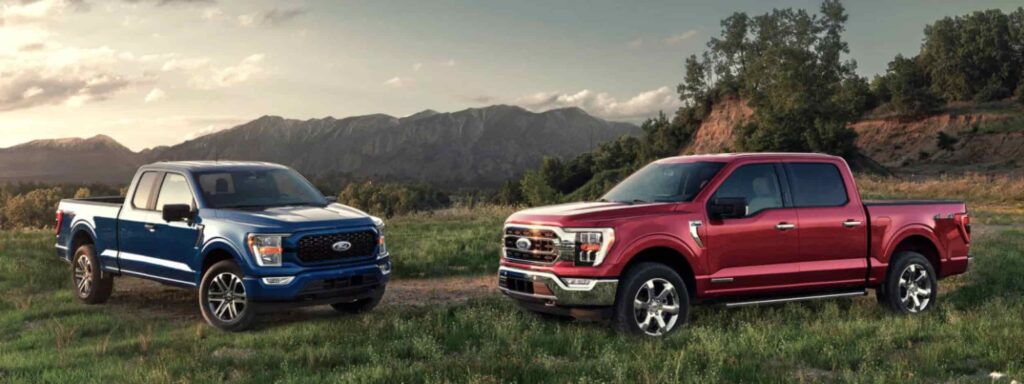
Ford F-150 vs Super Duty: Which Truck Is Right for You in Gallatin, TN?
If you’re deciding between a Ford F-150 and a Super Duty truck, you’re not alone. It’s one of the most common (and most confusing) truck-buying decisions for drivers in Gallatin and across Middle Tennessee.
The short version is this:
Neither truck is “better.” One is simply better for how you actually plan to use it.
This guide breaks down the real-world differences so you can choose confidently without overbuying or coming up short later.
The Short Answer
For most Gallatin drivers, a properly equipped Ford F-150 is more than enough for daily driving, weekend towing, and light-to-moderate work. A Super Duty truck makes sense when towing or hauling heavy loads is frequent, predictable, and central to how the truck is used, especially for business or demanding work.
The decision isn’t about maximum numbers. It’s about consistency of use.
The Real Difference Between an F-150 and a Super Duty
On paper, the differences look dramatic: bigger frames, higher towing numbers, heavier components. In practice, the real difference comes down to how often you need that extra capability.
Many buyers assume:
- Bigger truck = safer choice
- More capability = better value
In reality, the best truck is the one that fits your most common driving days—not the rarest scenario.
| Model | Weight-Carrying Max Trailer (lbs.) | Weight-Carrying Max Tongue (lbs.) | Weight-Distributing Max Trailer (lbs.) | Weight-Distributing Max Tongue (lbs.) |
|---|---|---|---|---|
| F-150 | 5,000 | 500 | 13,500* | 1,400 |
| F-250 | 22,000 | 2,200 | 22,000 | 2,200 |
*F-150 weight-distributing max trailer capacity shown with required towing equipment to achieve max ratings.
Source: Hitch receiver weight capacity charts in the 2026 Ford RV & Trailer Towing Guide (F-150 hitch receiver capacity; Super Duty hitch receiver capacity). Confirm on the hitch label and in the owner’s manual for your exact truck.
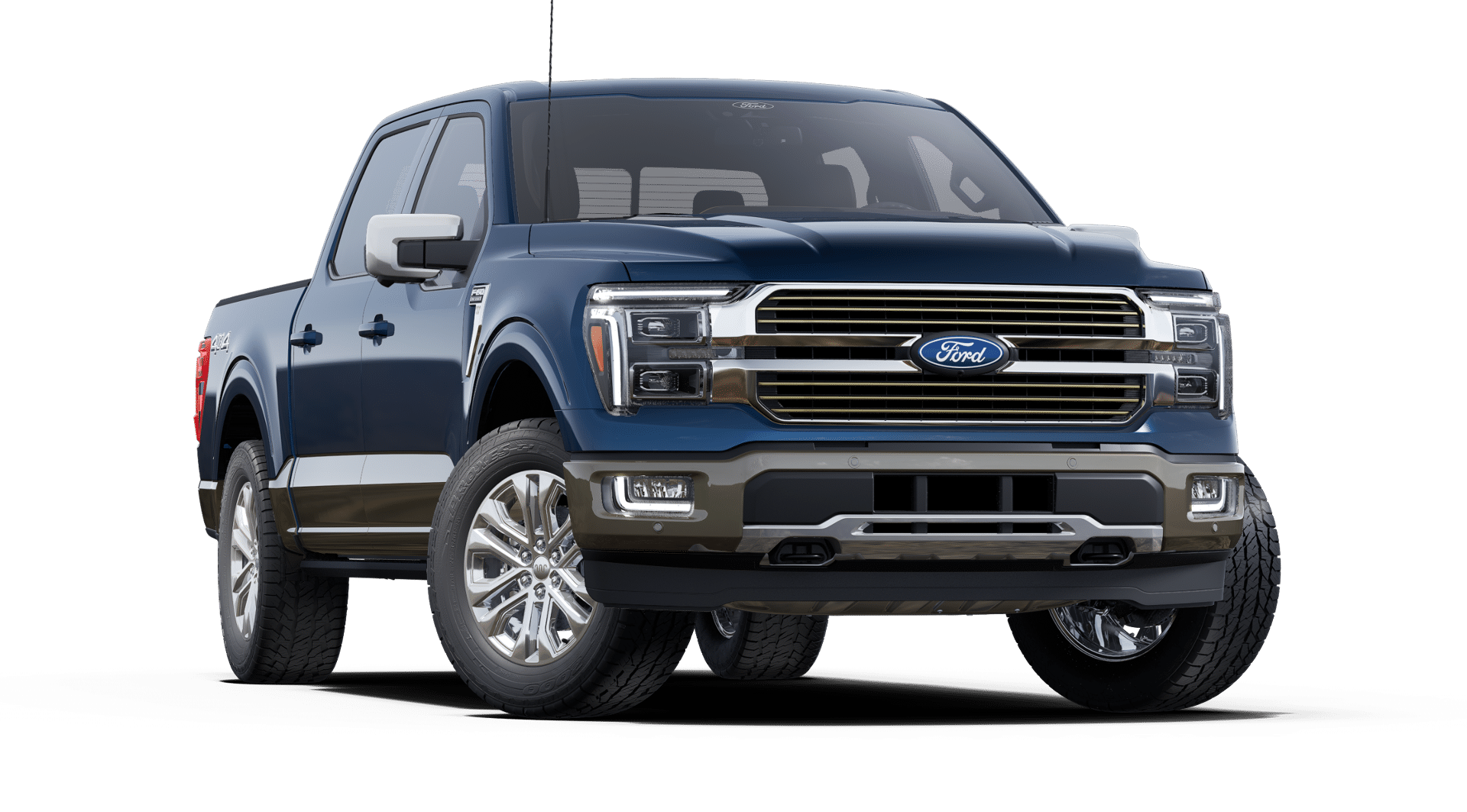
Ford F-150: Best for Most Drivers
The Ford F-150 is designed to handle a wide range of needs without feeling oversized or inefficient for everyday use.
An F-150 is often the right choice if you:
- Drive your truck daily
- Tow a boat, camper, or utility trailer occasionally
- Want a comfortable ride for commuting and errands
- Use your truck for both work and family life
For many Middle Tennessee drivers, the F-150 strikes the ideal balance between capability and comfort. It’s powerful when you need it, but still easy to live with the rest of the time.
Ford Super Duty (F-250 / F-350): Built for Heavy, Frequent Work
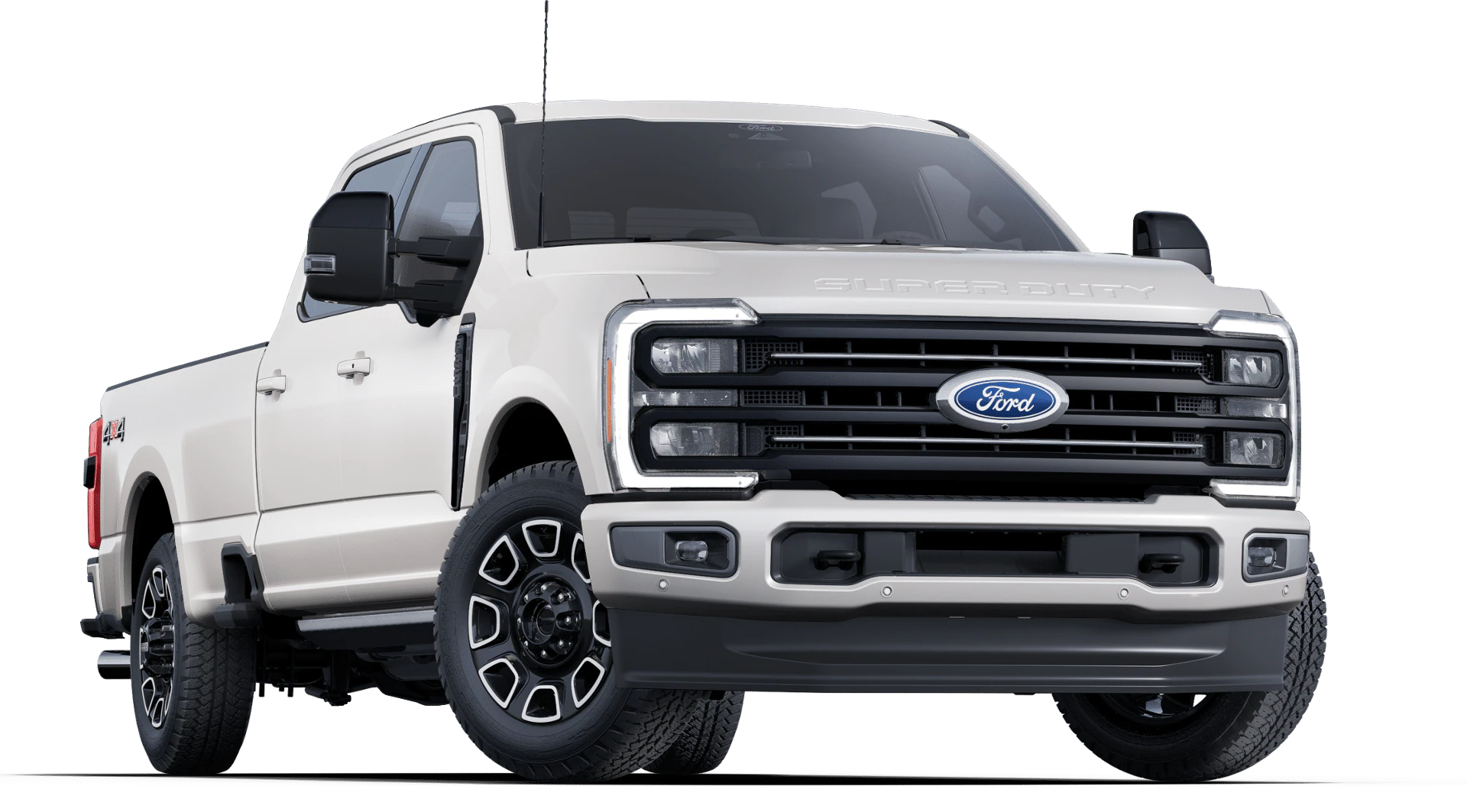
Super Duty trucks are purpose-built for demanding jobs. They shine when capability isn’t optional—it’s required.
A Super Duty may be the better fit if you:
- Tow heavy trailers regularly
- Haul equipment or materials as part of your work
- Run a business that depends on payload capacity
- Need maximum durability day after day
If towing and hauling are routine parts of your schedule, a Super Duty can make work easier and more reliable. If those demands are occasional, the added size and cost may be unnecessary.
Ford Super Duty (F-250 / F-350): Built for Heavy, Frequent Work
Super Duty trucks are purpose-built for demanding jobs. They shine when capability isn’t optional—it’s required.
A Super Duty may be the better fit if you:
- Tow heavy trailers regularly
- Haul equipment or materials as part of your work
- Run a business that depends on payload capacity
- Need maximum durability day after day
If towing and hauling are routine parts of your schedule, a Super Duty can make work easier and more reliable. If those demands are occasional, the added size and cost may be unnecessary.
Towing and Payload: What Most Buyers Miss
Towing capacity gets all the attention, but payload matters just as much—and often more.
Payload includes:
- Passengers
- Tools and gear
- Cargo in the bed
- Trailer tongue weight
In real-world Tennessee use—boats on Old Hickory Lake, campers, utility trailers—many drivers are surprised how capable an F-150 can be when properly equipped. When towing becomes frequent and heavy, that’s where Super Duty trucks truly earn their keep.
| Model | Max Conventional Tow (lbs.)* | Max 5th-Wheel / Gooseneck Tow (lbs.)* | Max Payload (lbs.)* | What that usually means |
|---|---|---|---|---|
| 2026 Ford F-150 | Up to 13,500 | Up to 11,700 depends on config | Up to 2,440 | Best “do-everything” truck for daily driving + weekend towing + light-to-moderate work. |
| 2026 Ford F-250 Super Duty (SRW) | Up to ~22,000 example configs | Up to ~22,900 example configs | Up to 8,000 Super Duty range | Built for frequent heavy towing/hauling, especially for business use, equipment, or larger RV trailers. |
*When properly equipped. Capacities vary by engine, axle ratio, cab/bed, 4x2 vs 4x4, options, passengers, cargo, and hitch setup.
Source: 2026 Ford RV & Trailer Towing Guide (engine/capability summary + towing selector tables). Always confirm your specific truck’s ratings on the doorjamb label and owner’s manual.
| 2026 F-150 Engine | Horsepower | Torque | Available Max Towing (lbs.)* | Available Max Payload (lbs.)* |
|---|---|---|---|---|
| 2.7L EcoBoost V6 | 325 | 400 lb-ft | 8,400 | 1,775 |
| 3.5L EcoBoost V6 | 382 | 500 lb-ft | 13,500 | 2,440 |
| 3.5L PowerBoost Full Hybrid V6 | 420 | 570 lb-ft | 11,600 | 1,740 |
| 5.0L Ti-VCT V8 | 400 | 410 lb-ft | 12,800 | 2,235 |
| 3.5L EcoBoost H.O. (Raptor) | 450 | 510 lb-ft | 8,200 | 1,405 |
| 5.2L Supercharged V8 (Raptor R) | 720 | 640 lb-ft | 8,700 | 1,410 |
*When properly equipped. Max towing/payload vary by configuration and may not be achieved simultaneously.
Source: 2026 Ford RV & Trailer Towing Guide – F-150 performance table (page 12).
| 2026 Super Duty Engine | Horsepower | Torque | Available Max Towing (lbs.)* | Available Max Payload (lbs.)* |
|---|---|---|---|---|
| 6.8L Gas V8 | 405 | 445 lb-ft | 18,900 | 8,000 |
| 7.3L Gas V8 | 430 | 485 lb-ft | 22,500 | 7,635 |
| 6.7L Power Stroke Diesel | 475 | 1,050 lb-ft | 38,600 | 6,952 |
| 6.7L High Output Power Stroke Diesel | 500 | 1,200 lb-ft | 40,000 | 6,935 |
*When properly equipped. Super Duty max towing shown in guide is tied to specific hitch setups (gooseneck/5th) and packages.
Source: 2026 Ford RV & Trailer Towing Guide – Super Duty performance table (page 13).
Daily Driving: Comfort, Fuel, and Practicality
This is where the difference becomes clear for many buyers.
F-150 Daily Driving Experience
- Feels more like a daily vehicle that happens to be a truck
- Smoother ride
- Easier parking and maneuvering
- Better fuel efficiency options
Super Duty Daily Driving Experience
- Best suited for drivers who prioritize work demands
- Firm, work-focused ride
- Larger footprint
- Designed with capability first, comfort second
If your truck needs to handle school drop-offs, errands, and commuting as often as towing or hauling, the F-150 is usually the easier truck to live with.
Cost of Ownership: What to Expect
Ownership costs go beyond purchase price.
In general:
- Super Duty trucks tend to cost more to fuel, maintain, and insure
- Tires, brakes, and service items are typically larger and more expensive
- F-150 ownership costs are often lower over time for mixed-use drivers
That doesn’t make one truck better than the other—it just reinforces the importance of matching the truck to how you’ll use it most days.
So, Which Truck Should You Choose?
Choose a Ford F-150 if:
- Your truck doubles as a daily driver
- Towing and hauling are occasional
- You want flexibility without excess size
Choose a Super Duty if:
- Heavy towing or hauling is routine
- The truck supports your business or livelihood
- Maximum capability is non-negotiable
The right choice is the one that fits your real-world needs—not just the biggest number on a brochure.
Common Questions About F-150 vs Super Duty
Is an F-150 strong enough for towing?
Yes. A properly equipped Ford F-150 can handle a wide range of towing needs common in Middle Tennessee.
For many drivers, an F-150 is more than capable. When properly equipped, the F-150 can tow boats, campers, utility trailers, and equipment that are common around Middle Tennessee, including lake and weekend recreation use. The key is matching the engine, axle ratio, and towing package to what you actually plan to tow. If towing is occasional rather than constant, the F-150 often provides the right balance of capability, comfort, and everyday drivability.
<strong>When do I really need a Super Duty?</strong><br>
You typically need a Super Duty if you tow heavy loads frequently or rely on your truck for demanding work.
A Super Duty makes sense when towing or hauling isn’t just occasional—it’s a regular part of your work or lifestyle. If you frequently tow heavy trailers, haul equipment daily, or depend on your truck for business use, the added payload capacity, stronger frame, and heavy-duty components of a Super Duty provide long-term durability and confidence. For drivers who only tow occasionally, that extra capability may go unused.
Which truck is better for daily driving?
Most drivers find the Ford F-150 easier and more comfortable for everyday driving.
For daily driving, most people prefer the F-150. It offers a smoother ride, easier maneuverability, and better fuel-efficiency options compared to a Super Duty. The F-150 is designed to feel comfortable during commutes, errands, and long highway drives while still being capable when towing or hauling is needed. Super Duty trucks prioritize work and capability first, which can feel less practical for everyday use if heavy towing isn’t part of your routine.
Still Deciding?
If you’re weighing multiple factors—daily driving, towing, work needs—our full Truck Buying Guide for Gallatin, TN Drivers walks through everything step by step to help you choose with confidence.
And if you want local insight based on how trucks are actually used in Sumner County, the team at Gallatin Ford can help you compare options without pressure.